

In the field of nasal drug delivery, the atomization effect of a nasal spray directly affects drug absorption efficiency and therapeutic efficacy. As a core component, the choice of atomizer plates is particularly critical. Faced with a wide variety of atomizer plates on the market, how can one choose the one that's best suited for nasal spray applications? Experts point out that it's important to focus on three key indicators: atomizer particle precision, material safety, and compatibility. Ceramic atomizer plates have become the mainstream choice due to their unique advantages, while customized solutions that incorporate the performance of piezoelectric ceramic transducers can better meet the stringent requirements of nasal drug delivery.
Particle size and distribution are the primary considerations for nasal spray atomizer plates. The nasal mucosa is extremely sensitive to atomizer particle diameter. Excessively coarse atomizer particles can easily cause irritation, while too fine particles can be lost in the breath. An ideal nasal spray atomizer plate should produce uniform atomized particles of 3-5μm. Particles within this range adhere precisely to the nasal mucosa, enhancing drug absorption. The Ceramic Atomizer Plate uses laser engraving technology to create micron-sized atomization holes. Combined with the high-frequency vibration of a piezoelectric ceramic transducer (typically 100-180kHz), it consistently produces atomized particles that meet the required specifications, with distribution deviations controlled within ±10%. In contrast, conventional metal atomizer plates, due to the limitations of the stamping process, typically produce atomized particles in the 8-15μm range. These are more suitable for applications like humidification and lack the precision required for nasal spray drug delivery.
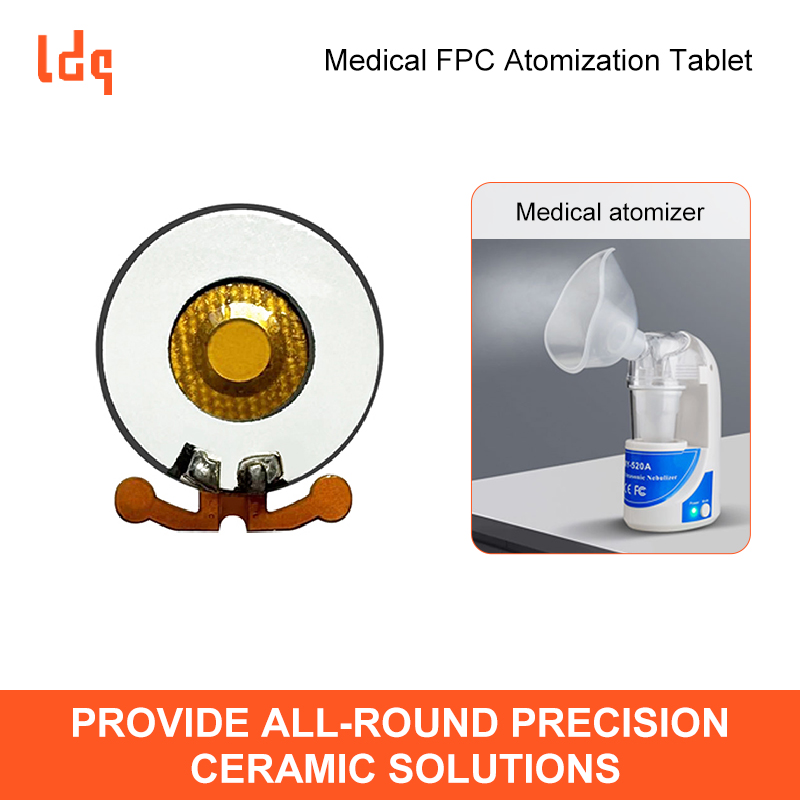
Material safety and biocompatibility are directly linked to drug safety. The nasal mucosa is a sensitive tissue, so the atomizer plate material must be non-toxic, corrosion-resistant, and non-leachable. The Ceramic Atomizer Plate is made of high-purity alumina ceramic and has been certified for biocompatibility. It does not chemically react with saline or steroid solutions, preventing drug contamination. Its dense and smooth surface resists drug residue and bacterial growth, reducing the risk of cross-infection. Some low-quality plastic atomizer plates may release plasticizers over time, while metal atomizer plates may oxidize and rust, affecting drug purity. Therefore, ceramic is a more reliable choice for nasal spray applications.
Compatibility and stability with the device determine the sustainability of the atomization effect. Nasal spray chamber designs and power specifications vary, and atomizer plates must be matched to these specifications for optimal performance. Professional manufacturers customize the resonant frequency of the Piezoceramic Transducer based on parameters such as the device's vibration frequency and drug solution viscosity to ensure stable amplitude during operation of the Ceramic Atomizer Plate and avoid fluctuations in atomization volume due to resonance imbalance. For example, for pediatric nasal sprayers, low-power piezoelectric ceramic transducers can be paired with thin ceramic atomizer plates to reduce noise while maintaining uniform atomization volume. Furthermore, the atomizer plate's resistance to clogging is crucial. Nasal medications often contain suspensions, and the tapered channel design of the Ceramic Atomizer Plate reduces drug deposits and extends cleaning cycles. Conventional atomizer plates, however, are prone to particle clogging, leading to atomization interruptions.
Service life and maintenance costs are also practical considerations. High-quality Ceramic Atomizer Plates undergo a reinforced sintering process, increasing their impact resistance by 40%. Under normal use, they boast a lifespan of over 5,000 cycles, far exceeding the 1,000 cycles of plastic atomizer plates. While initial purchase costs are higher, their infrequent replacement reduces long-term overall costs. During routine maintenance, ceramic materials can withstand alcohol disinfection, while metal atomizer plates may experience performance degradation due to corrosion, increasing the operational burden of the equipment.
Choosing a nasal spray atomizer plate is fundamentally about striking a balance between the need for precise drug delivery and the actual usage scenario. Prioritize ceramic atomizer plates designed for 3-5μm atomizer particles. Pay attention to their compatibility with the piezoelectric ceramic transducer and material certification to ensure stable atomization and safe, reliable medication administration. With the advancement of nasal drug delivery technology, new atomizer plates with intelligent atomization volume control are gradually being adopted, providing more possibilities for personalized treatment.