

In atomizer device manufacturing, the choice of core atomizer components directly impacts product performance and applicable scenarios. Atomizer plates and stainless steel atomizer plates are two mainstream components, commonly used in medical and household applications. However, they differ significantly in material, operating principles, and application performance, requiring careful consideration when choosing between them. Ceramic atomizer plates dominate the high-end market with their high precision, while stainless steel atomizer plates offer a cost-effective solution for the mass market. Specialized models like nasal spray atomizer plates highlight the importance of application-specific adaptation.
From a material and operating principle perspective, the core differences between the two types of atomizer plates determine their performance boundaries. Ceramic atomizer plates utilize an alumina ceramic substrate, with micron-sized atomization holes laser-engraved. A piezoelectric transducer generates high-frequency vibrations, breaking liquid into fine 3-5μm droplets. The atomization holes are also resistant to clogging. Stainless steel atomizer plates are stamped from 304 stainless steel, with apertures typically exceeding 10μm. They rely on mechanical vibration to generate atomization, resulting in a wider distribution of atomized particles. This difference makes ceramic atomizer plates more easily absorbed by the body when atomizing medications, making them particularly suitable for medical devices such as nasal spray atomizers. The nasal mucosa is sensitive to atomized particle size, and coarse particles can cause irritation. The fine mist produced by the Ceramic Atomizer Plate can precisely target the deep nasal cavity.
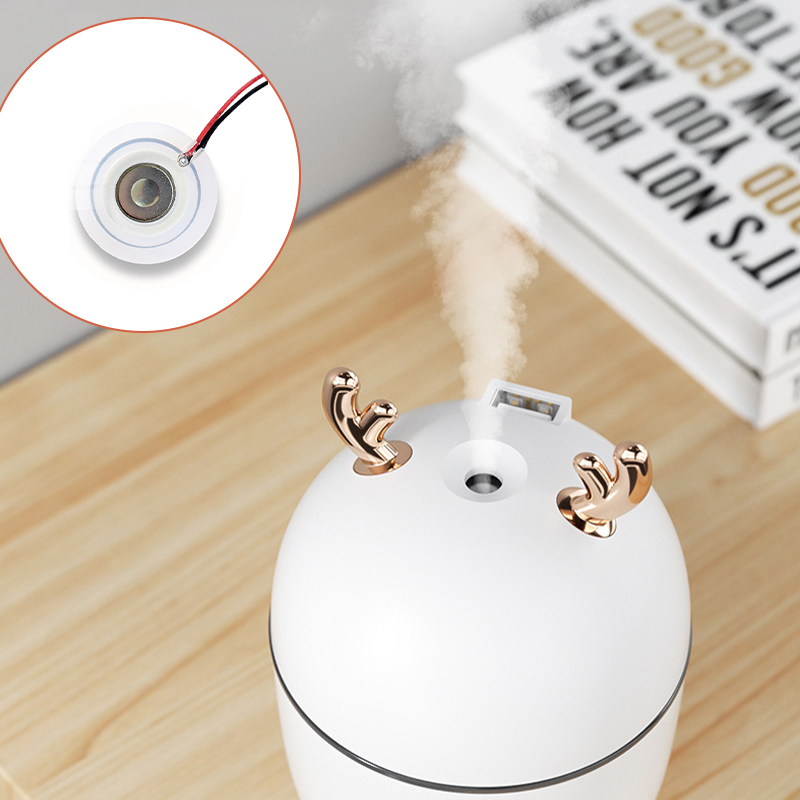
When choosing between suitable applications and durability, environmental adaptability should be considered. In industrial humidification equipment, stainless steel atomizer plates offer advantages due to their acid, alkali, and impact resistance. Their metal material can withstand even low-quality tap water, resulting in a service life of over 8,000 hours. In medical nebulizers, the chemical stability of the Ceramic Atomizer Plate is even more critical. The ceramic material does not react with medications, ensuring the purity of medications like insulin and antibiotics. Furthermore, their smooth, easy-to-clean surface meets medical-grade hygiene standards. Tests conducted by a medical device manufacturer showed that after 300 consecutive uses, a nebulizer using a ceramic atomizer plate experienced a dropout rate of only 5%, significantly lower than the 15% for stainless steel atomizer plates.
Balancing cost and maintenance is also a key decision-making factor. Stainless steel atomizer plates, with a unit price of only one-third that of ceramic atomizer plates, are suitable for high-volume use in low-cost devices such as home humidifiers. However, due to their proneness to scaling, they require replacement every three months on average. While ceramic atomizer plates have a higher initial investment, their resistance to scaling extends the replacement cycle to over 12 months, resulting in lower long-term costs. In precision instrumentation, such as laboratory aerosol generators, the high consistency of ceramic atomizer plates (atomizer volume error of ±2%) ensures stable experimental data, a feat difficult to replicate with stainless steel atomizer plates.
Notably, the demand for customized atomizer plates for specialized applications is driving the segmentation of atomizer plates. The Nasal Spray Atomizer Plate optimizes the atomization angle for the nasal cavity, ensuring a targeted spray pattern. The industrial high-flow atomizer plate, on the other hand, increases atomization efficiency by increasing the vibrating surface area. These customized designs make the question of "which is better" increasingly clear: Ceramic atomizer plates are preferred in medical and precision applications, while stainless steel atomizer plates are preferred for cost-sensitive applications like home and industrial use.
Atomizer plates and stainless steel atomizer plates are not absolute substitutes; rather, each has its own strengths. When choosing between atomizers, factors such as atomizer precision, material compatibility, and cost must be comprehensively considered to ensure a precise match between core components and device functionality for optimal atomization. With advances in piezoelectric technology, the performance boundaries between the two types of atomizer plates are constantly being pushed. New products combining high precision and low cost may emerge in the future, further enriching market options.