

Nowadays, routine teeth cleaning is usually performed by dentists using special ultrasonic equipment. The basic principle of teeth cleaning is actually very simple, which is to make the toothbrush blade produce high-frequency vibration. When the metal tip gently touches and slides on the surface of the teeth and tartar, the loose tartar will fall off. While vibrating, water will be sprayed to cool down to avoid excessive local temperature.
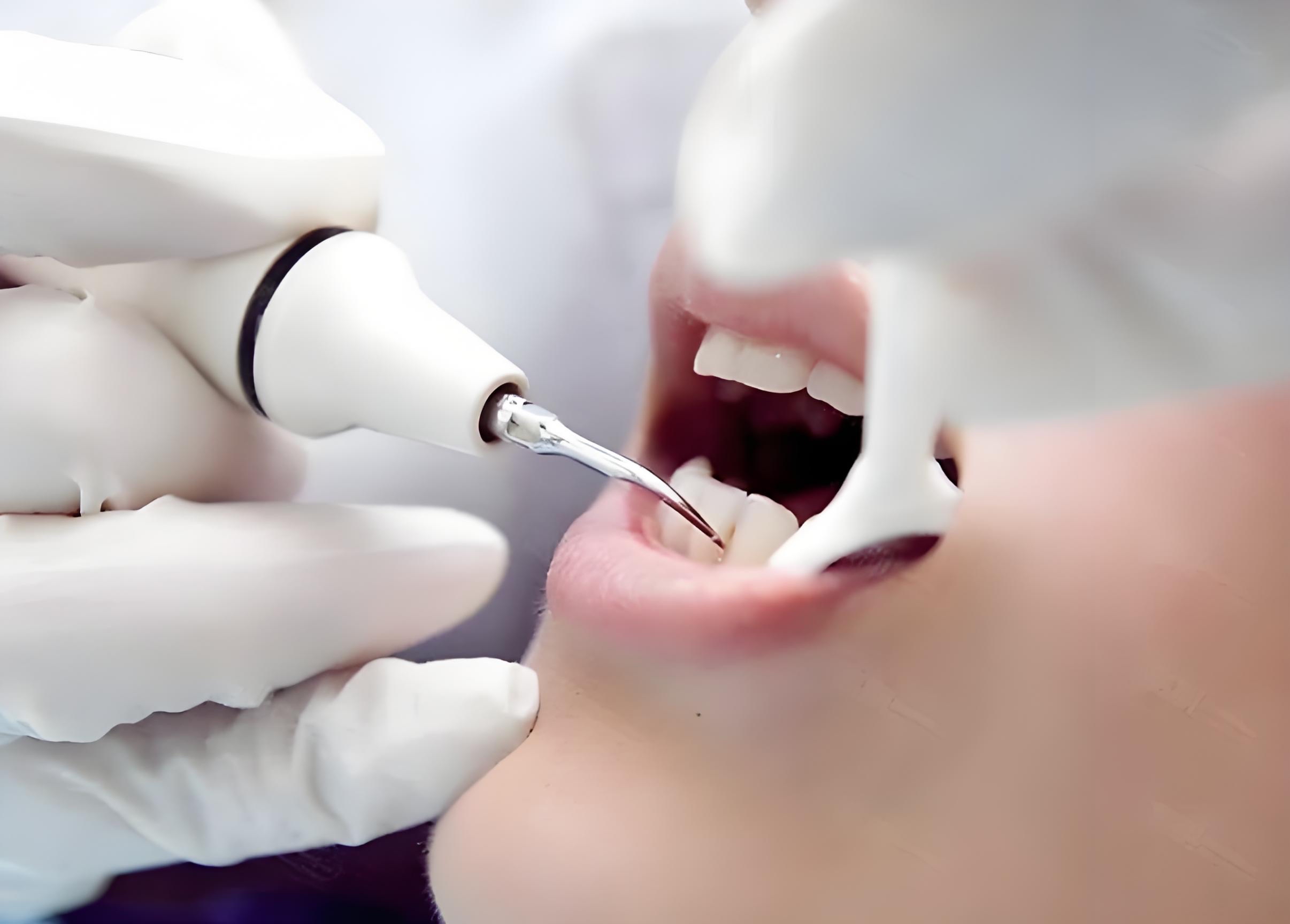
Some people are reluctant to clean their teeth because they think that "teeth cleaning" is medication and will hurt the teeth and mouth. In fact, this is a misunderstanding.
Remember the basic principle of teeth cleaning we just talked about? The water we use when cleaning our teeth is medical pure water, which is used to rinse the detached tartar and can also play a cooling role.
After cleaning most of the tartar, there will be a "sandblasting" step for teeth with more pigmentation. It is to use high-pressure water mixed with extremely fine powder to spray on the surface of the teeth to remove residual dirt and dental plaque. Finally, drugs (such as iodine glycerin) will be applied to the gums to assist in controlling local inflammation.
Although we occasionally see some colleagues cleaning and extracting teeth in front of the mirror in short videos. However, this operation is not standardized for insiders, and it is absolutely not recommended for laymen. These behaviors are more for self-entertainment, or to attract attention and traffic. If we really want to standardize teeth cleaning and extraction, even we dentists have to ask our peers for help.
If you have had your teeth cleaned, your dentist will definitely hold the tooth cleaning handle in one hand - yes, the tool that splashes water and makes a "sizzling" sound, and a small mirror (mouth mirror) in the other hand. This is because the internal environment of the mouth is very small, and many people cannot see directly (even through the dressing mirror!), and must rely on the mirror to reflect light in the mouth to see the corners of the teeth. Although some tooth cleaning equipment now has visual functions, this still cannot completely avoid other problems.
The reason why self-cleaning is not recommended, the author's biggest concern is: unable to clean or damage the teeth. If ordinary people have not undergone rigorous training, they may not be able to accurately judge the location of tartar, and it is difficult to control the degree of force when cleaning teeth, let alone operate teeth in an awkward posture (especially when they cannot look directly).
You should know that the high-frequency vibration of the toothbrush metal blade tip at the head of the toothbrush handle is fine if it only touches the dental plaque, but if you use too much force and accidentally touch your teeth or gums, it may become a very unforgettable experience.
In short, if you buy a toothbrush tool yourself, it is easy to either use too little force or the wrong angle, resulting in the inability to shake off the dental plaque; or use too much force, resulting in tooth sensitivity or even damage due to external force. As for gum damage, it is even more difficult to avoid.